An emergency exit door is not just another entrance. During a fire, smoke event, power failure, or other emergency, it becomes part of the path people depend on to leave the building quickly.
That is why a sticking latch, misaligned frame, over-tight door closer, damaged panic bar, or added lock can create a serious problem. Emergency exit door repair should focus on more than making the door “work again.” The goal is to restore smooth, reliable egress so occupants can release and open the door without unnecessary force, delay, or confusion.
For commercial properties, easy operation is part of life-safety planning, not simply convenience.
Emergency Exit Doors Are Part of the Means of Egress
Building and fire codes use the term “means of egress” to describe the continuous path people use to travel from an occupied area to safety outside the building.
Doors are one of the most important parts of that path because everyone must pass through them.
Rhode Island’s current building regulations adopt Chapter 10 of the International Building Code for means of egress without state amendments, while existing-building rules also require egress doors and locking arrangements to comply with applicable life-safety requirements.
A hallway can be wide, and an exit sign can be visible, but neither helps if the final door is difficult to release.
An Exit Door Should Not Become the Bottleneck
During normal business hours, one person may compensate for a problem by:
- Pulling the door toward the frame before pressing the bar
- Lifting the handle
- Pushing harder
- Trying the latch twice
- Asking another employee how the lock works
During an emergency, those workarounds are unacceptable.
People should be able to approach the exit and operate it as intended without stopping to figure out a malfunction.
Egress Hardware Must Release Without Complicated Actions
A required exit should not depend on someone finding a key, using a tool, or remembering an unusual sequence before leaving.
NFPA life-safety provisions emphasize that unlocking and unlatching from the egress side should be possible without a key, tool, special knowledge, or unusual effort where those requirements apply.
This principle affects several parts of the door.
Check the Entire Release Path
When someone operates the exit, all of these components may have to work together:
- Lever or panic hardware
- Latch
- Strike
- Door closer
- Hinges or pivots
- Frame
- Electronic locking hardware
- Access-control system
- Fire alarm interface where applicable
A problem with any one of them can make the door feel difficult even when the others are functioning.
Panic Hardware Is Built for Quick Exit
Panic hardware allows someone to release a latched door by pressing a horizontal bar or push pad.
That operating style matters in buildings where many people may reach the exit at the same time.
Instead of requiring each person to turn a knob or manipulate a smaller latch, pressure against the bar releases the door.
NFPA material for panic and fire exit hardware specifies that the latch should be released with horizontal force not exceeding 15 pounds on the actuating bar or pad.
When Panic Hardware Becomes Difficult to Operate
A panic bar may stop working smoothly because of:
- Internal wear
- Bent components
- Loose mounting screws
- Misaligned latch and strike
- Damaged vertical rods
- Impact from carts or equipment
- Corrosion
- Changes in door position
The problem may be inside the panic device, but it may also come from the door itself.
That is why emergency exit door repair should include both hardware and alignment.
Door Alignment Can Turn a Good Panic Bar Into a Bad Exit
A panic device can be in good condition and still feel difficult if the door has shifted.
Commercial doors move over time. Hinges wear, pivots loosen, frames shift, and repeated slamming can change how the latch meets the strike.
Common Alignment Problems Include:
- Door rubbing against the frame
- Latch striking too high or too low
- Door sagging at the top corner
- Bottom edge dragging
- Vertical rods missing their strikes
- Door needing to be pulled before it latches
If someone has to push the bar and then shoulder the door to get through, the opening needs attention.
Replacing the panic hardware alone may not solve the problem.
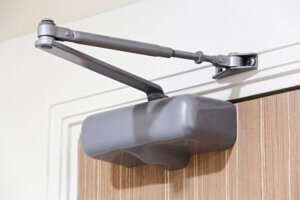
A Door Closer Can Make an Exit Too Hard to Push
The door closer controls the movement of the door after it is opened.
Its job may include returning the door to the frame, controlling closing speed, and helping the latch engage.
A closer that is adjusted incorrectly can make the door unnecessarily difficult to open.
Problems Caused by Poor Closer Adjustment
A closer may:
- Resist opening too strongly
- Slam the door
- Close too slowly
- Prevent full opening
- Fail to bring the door into the latch
- Add strain to hinges and panic hardware
The right setting depends on the door, closer model, wind conditions, fire-rating requirements, accessibility provisions, and other factors.
Simply increasing spring force to make a door latch harder is not always the correct repair.
Fire Exit Hardware Has an Additional Job
A fire-rated exit door has to allow people out while also performing as part of a fire-resistance-rated opening.
Where panic-type operation is required on a fire door, fire exit hardware is used rather than ordinary panic hardware.
The door must still close and latch as required after someone passes through.
NFPA 80 covers inspection, testing, and maintenance of fire doors and other opening protectives.
This Means the Door Cannot Be Judged Only by Opening
A fire exit door can have problems even if it opens easily.
It also needs attention if it:
- Fails to close
- Does not latch
- Has damaged hardware
- Has been modified improperly
- Rubs the frame
- Has missing components
Egress and fire protection have to work together.
Added Locks Can Make an Emergency Exit Unsafe
Security upgrades sometimes create exit problems.
A business may add a deadbolt, padlock, surface bolt, magnetic lock, chain, or another device because management wants stronger after-hours security.
If that hardware prevents required egress, the security improvement creates another risk.
Be Careful With After-Hours Locking Practices
A door may work correctly during an inspection but become unusable because staff adds temporary locking devices later.
Common examples include:
- Padlocks through panic hardware
- Chains around door handles
- Manual bolts added above or below the latch
- Furniture placed against the door
- Security bars not intended for the opening
Required emergency exits should remain usable under the conditions set by applicable codes and approved building operations.
Electronic Access Control Must Fail Safely for Egress
Electronic locking adds another layer of complexity.
Card readers, magnetic locks, electric strikes, request-to-exit devices, and controlled egress systems can all affect how an exit operates.
Depending on the system and code provision, doors may need to unlock through sensors, hardware operation, manual release devices, fire alarm signals, or loss of power.
NFPA provisions for sensor-release electrically locked egress doors include requirements for unlocking upon occupant approach, power loss, and operation of an independent release device.
A Door Can Have Both Electronic and Mechanical Problems
For example, the electric lock may release correctly while the physical latch still binds.
Or the panic bar may work mechanically while an access-control component prevents normal release.
Testing should therefore include the complete system.
Exit Doors Must Stay Clear
An emergency door cannot open easily if the path around it is blocked.
Storage tends to build up near secondary exits because these doors may not receive regular customer traffic.
Boxes, merchandise, equipment, furniture, trash containers, and delivery materials can gradually narrow the path.
Keep These Areas Clear
Check:
- The approach to the exit
- The full door swing
- The threshold
- The exterior landing
- Stairs or ramps beyond the door
- Any required path leading away from the building
A perfectly repaired door still cannot serve its purpose if someone has to move stored items before reaching it.
Weather Can Make Exterior Exit Doors Harder to Open
Emergency exits that lead directly outside face conditions interior doors do not.
Rain, freezing temperatures, corrosion, debris, wind, and seasonal movement can all affect operation.
Exterior Door Problems Can Include
- Corroded hinges
- Rusted panic hardware
- Swollen or deteriorated frames
- Water at the threshold
- Ice near the opening
- Failed weatherstripping
- Strong wind pressure
A door that worked correctly during mild weather can develop problems later.
Exterior exit doors should therefore be checked throughout the year rather than only after someone reports a failure.
Why Sticking Exit Doors Tend to Get Worse
Door problems rarely correct themselves.
If a latch rubs the strike every time the door opens, both parts continue wearing. If the closer slams, hardware receives another impact every cycle. If a hinge is loose, the door may continue sagging.
Early Problems Often Look Minor
You may first notice:
- A small scrape on the frame
- A panic bar that needs extra pressure
- A door that does not latch on the first try
- A closer making noise
- A loose handle
- The bottom corner beginning to drag
These are useful warning signs because the opening can often be corrected before it stops functioning.
Waiting until the exit is unusable turns routine service into urgent emergency exit door repair.
When Should an Emergency Exit Door Be Repaired?
You do not need to wait for a complete failure.
Schedule an inspection when any part of the door changes noticeably.
Repair Is Needed When:
- The door sticks during opening.
- Panic hardware requires unusual force.
- The latch does not retract completely.
- The door rubs the frame.
- The door fails to close and latch.
- The closer slams or resists opening.
- Hinges or pivots are loose.
- Electronic locking does not release correctly.
- Hardware is damaged or missing.
- Corrosion affects the door or frame.
- Employees have developed a workaround to open the exit.
That last point is especially useful.
If regular occupants have learned that they must “pull first and then push” or “hit the bar twice,” the door is already telling you something is wrong.
A Quick Emergency Exit Door Inspection
Facility managers can catch many problems through regular visual and operational checks.
- Approach the Door Normally
Do not manipulate it differently because you already know about an issue.
- Operatethe Exit Hardware
The latch should release smoothly without unusual effort.
- Open the Door Fully
Watch for rubbing, dragging, or closer resistance.
- Let the Door Close
The closer should control movement without slamming.
- Confirm Latching
The door should return to the proper closed position and latch where required.
- Inspect the Surrounding Area
Make sure storage, floor mats, weather conditions, or exterior obstacles do not interfere with use.
- Test Related Electronic Systems
Where access control is installed, verify that the approved release functions work.
Document repeated problems rather than treating each one as a separate inconvenience.
Rhode Island Businesses Need to Consider Both Building and Fire Requirements
Emergency exit doors are regulated as part of life safety, and requirements can vary according to occupancy, building age, renovation history, and the type of door.
Rhode Island’s current building code adopts Chapter 10 of the IBC without state changes for means of egress. Its existing-building regulations also reference NFPA 101 requirements for locking mechanisms and egress arrangements, including panic or fire exit hardware in certain assembly and educational rehabilitation conditions.
That means a repair should not be approached as a hardware swap without considering what the opening is required to do.
A change to locks, panic hardware, closers, or access-control equipment may affect code compliance even if the replacement product physically fits the door.
Fix the Exit Before People Have to Depend on It
An emergency exit door is easy to ignore because most people use the main entrance every day. The problem becomes obvious only when the panic bar sticks, the closer fights the user, the latch binds, or the door cannot open quickly when occupants need another way out.
Providence Door Company can assist with emergency exit door repair when commercial exit doors develop problems with hardware, alignment, closing, latching, or operation.