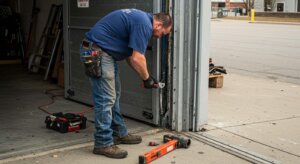
When an emergency hits a building, people rush to the nearest exit, and every second counts. A door that will not open fast can turn a scare into a tragedy. This is where a panic bar comes in, the horizontal push bar you have seen on the exit doors of stores, schools, and offices. If you run a business and wonder whether you need one, panic bar installation in Providence, RI, is often more than a nice extra; it is a code requirement tied to safety. This guide breaks down what these devices do and when your building needs them.
How Does a Panic Bar Work?
A panic bar is a door-latching device with a spring-loaded bar or pad across the inside of the door. Push it, and the latch releases at once, so the door swings open with a single motion. There is no key to find, no knob to twist, and no fumbling under stress. That is the whole point: a fast escape when a crowd needs to get out.
You may hear it called a crash bar, a push bar, an exit device, or panic hardware. These all point to the same tool. The bar covers at least half the width of the door, so a person can hit almost any part of it and still get out. Some models pair with an outside handle or key cylinder, so staff can enter from outside while the door still opens freely from within. This one-way freedom is what makes panic hardware both safe and secure.
Does Your Business Need a Panic Bar?
The honest answer depends on how your space is used and how many people it holds. Panic hardware is not required on every commercial door but building and fire codes make it mandatory for certain spaces. Under the International Building Code, doors with a lock or latch that serve assembly or educational spaces with an occupant load of 50 or more, and all high-hazard areas, must have panic hardware or fire exit hardware, as national code guidance on panic hardware explains. The Life Safety Code, NFPA 101, sets the threshold at 100 or more for assembly, educational, and day care spaces, and more than five people for high-hazard areas.
So which businesses tend to need it? You will often see the requirement apply to:
- Restaurants, bars, banquet halls, theaters, and event venues that gather crowds
- Schools, training centers, and daycare facilities
- Places of worship and community halls
- Warehouses or plants that store or handle hazardous materials
- Electrical rooms with large equipment, under certain conditions
Plain offices and retail shops, which are classified as business and mercantile spaces, often do not need panic bars on their main doors. Yet the moment a building adds a meeting hall, a lunchroom, or a training room that packs in 50 or more people, the doors serving that space fall under the rule. Since the local Authority Having Jurisdiction has the final say, a quick check with a door professional keeps you on the right side of the code.
Types of Panic Bars and Exit Devices for Commercial Doors
Not every door takes the same device, so picking the right type matters for both safety and fit. The main styles differ in how the latch sits in the door and the frame.
Rim and Mortise Devices
Rim devices mount on the surface of the door and latch into a strike on the frame. They suit single doors and many storefront setups. Mortise devices fit into a pocket cut into the door edge, which gives a cleaner look and a strong hold for heavier doors.
Vertical Rod Devices
These use rods that run up and down the door to latch at the top and bottom of the frame. Surface vertical rod and concealed vertical rod options both work well on double doors, where there is no center post to latch into.
Touchpad and Crossbar Styles
The push surface comes as a wide touchpad or a classic crossbar. Both release with one push, though touchpad models give a sleeker profile. For balanced doors, only a touchpad that covers part of the leaf may be used, so the door opens the right way.
For any of these, a proper mix of panic and fire exit devices keeps each door matched to its job and its code class.
Panic Bars vs Fire Exit Hardware: What Sets Them Apart
People often use the two terms as if they mean the same thing, but there is a clear line between them. Standard panic bars handle quick egress on regular doors. Fire exit hardware does the same job, and it carries an extra fire-resistance rating for use on fire-rated door assemblies.
The key difference is latching. A fire door must stay latched to hold back smoke and flames, so fire exit hardware always latches positively and passes fire testing. Standard panic hardware can be set to stay unlatched, which a fire door can never allow. Putting the wrong device on a fire door is a code violation and breaks the fire barrier when it matters most. If your exits include fire-rated exit doors, they need fire exit hardware, not a plain panic bar. Knowing this difference protects both your people and your compliance record.
The Cost of Ignoring Panic Bar Rules
Skipping the right exit hardware might save a little today, but the bill comes due in ways that hurt. A failed fire inspection can shut your doors until you fix the problem, which means lost sales and a scramble to get compliant. Fines pile up when a building blocks or locks an exit, and the fault sits with the owner.
The larger risk is human. History holds many tragedies where locked or jammed exits trapped people during a fire, and courts hold businesses responsible when an exit fails. A working panic bar removes that risk with a single push. When you weigh a small hardware cost against a lawsuit, a shutdown, or worse, the math is not close. So treating exit hardware as a core safety system, not an afterthought, protects your business and everyone inside it.
Panic Bar Installation Requirements for Code Compliance
A panic bar only protects people when it is installed to code, and small errors can fail an inspection. The device has to sit at the correct height and operate with ease, so anyone can trigger it in a rush.
A compliant setup follows a few clear rules:
- The push bar or pad mounts between 34 and 48 inches above the finished floor.
- The bar covers at least half the width of the door leaf.
- A force of no more than 15 pounds releases the latch in one motion.
- Fire-rated openings get fire exit hardware with positive latching.
- The door swings in the direction people travel to exit.
The device also needs to work with one hand and no tight grip, so it stays usable for everyone. Getting panic bar installation in Providence RI, handled by a trained door team keeps each of these details correct, and it saves you from a repeat visit after a failed check. Correct alignment, solid strikes, and the right device for each door make the difference between hardware that passes and hardware that puts you at risk.
Book Panic Bar Installation in Providence Before Your Next Inspection
An exit door is the one part of your building that has to work on the worst day. A jammed lock or a missing panic bar can cost you a fine, a shutdown, or a life, and none of that is worth the gamble. Every day your doors stay out of code is a day you carry that risk on your shoulders.
Providence Door Company installs and repairs panic bars, exit devices, and fire exit hardware for businesses across Providence and the wider Rhode Island area, with technicians who know the local codes and inspection standards. We match the right device to each door and set it to pass. If your exits need attention, reach out to our team for a quote. The next inspection or emergency will not wait, so the smart move is to lock in panic bar installation in Providence now and keep your exits ready when they matter most.