Your storefront entry is the first thing a customer interacts with before they ever speak to your staff or see your products. For most retail businesses, that entry is a glass door, and the type you choose affects foot traffic, energy costs, security, and how the space feels from the street. If you are planning to install or replace a glass storefront door in Providence, this guide covers what you need to think through before making that call.
What a Glass Storefront Door Does for Your Business
Glass doors on retail fronts do more than look open and welcoming. They work as a visibility tool, a security layer, and an energy barrier all at once. A poorly chosen door creates problems across all three of those areas.
Storefront security remains one of the top operational concerns for retail businesses in the US. The door you install plays a direct role in how well your entry holds up against forced entry attempts, weather, and daily wear.
Step One: Decide Between Swing and Sliding
The first practical decision is the door configuration. Both swing and sliding options are standard for retail, but they serve different purposes.
Swing Glass Doors
A single or double swing door works well for most standard retail entries. It is a familiar format for customers, takes up less interior space than a sliding system, and handles foot traffic at a pace most retail shops experience throughout the day.
Sliding Glass Doors
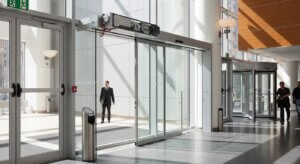
Sliding doors work better when your entry handles high volume continuously, like a grocery, pharmacy, or any retail format where customers move through the door constantly. Automatic sliding glass systems also support ADA accessibility requirements without any additional push or pull effort from the customer.
For a glass storefront door in Providence, the choice between swing and sliding often comes down to your floor plan, your customer volume, and whether you need ADA compliance from the entry point.
Step Two: Choose the Right Glass Type
Not all glass is the same, and the difference matters for a commercial storefront. The main types you will encounter are:
- Tempered glass: Standard for most commercial doors. It is heat-treated to be stronger than regular glass and breaks into small, less dangerous pieces on impact. Most building codes require it for commercial entries
- Laminated glass: Two layers of glass bonded with an interlayer. It holds together when broken, which makes it a stronger option against forced entry and is common in higher-security retail applications
- Insulated glass: Two panes with a sealed air gap between them. It performs better for energy efficiency and is worth considering if your entry faces direct sun or cold air exposure
- Tinted or low-e coated glass: Reduces heat gain and glare without blocking visibility. Useful for south or west-facing storefronts that get direct afternoon sun
For most retail businesses in Rhode Island, tempered glass covers the baseline requirement. If your location has had security concerns or your shop carries high-value merchandise, laminated glass is a better investment.
Step Three: Pick the Frame Material That Works for Your Climate
Glass alone does not make a storefront door. The frame material carries the glass, holds the hardware, and determines how well the door holds up over time.
Aluminum is the most common frame material for glass storefronts because it resists corrosion, handles the weight of large glass panels, and requires minimal maintenance. For a coastal city like Providence, aluminum performs better than steel frames that need coating to prevent rust.
The frame finish also affects appearance. Anodized aluminum comes in clear, bronze, and dark bronze options. Painted finishes give more colour flexibility but need repainting over time.
Step Four: Hardware and Security Features
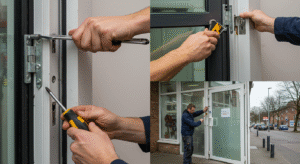
The hardware on your glass storefront door in Providence is where a lot of entries fall short. A door that looks good but has weak hardware creates a security gap that is easy to miss until something goes wrong.
Key hardware decisions include:
- Lock type: Mortise locks offer stronger security than surface-mounted deadbolts for commercial glass doors
- Door closer: A properly rated commercial door closer controls the speed and force of closing, which protects the glass and the frame from impact damage
- Panic hardware: Required on exit doors in most commercial occupancies under the fire code
- Pull handles: Commercial-grade stainless handles hold up to thousands of daily uses without loosening
If your current glass door repair costs are coming from failing hardware rather than the glass itself, that is usually a sign that the original hardware was not rated for commercial use.
Step Five: Check Local Code Requirements Before You Buy
Providence commercial buildings fall under Rhode Island building codes and NFPA fire safety standards. Depending on your building type and occupancy classification, your entry may require:
- Fire-rated door assemblies in certain zones
- Minimum door width for ADA compliance
- Specific panic bar requirements on exit paths
- Wind load ratings for exterior-facing glass
Buying a door without checking these requirements first leads to failed inspections and the cost of replacement before the door has even been used.
Get Your Glass Storefront Door in Providence Right
A glass storefront door that is not rated for your traffic volume will show wear fast. Closers fail, handles loosen, the frame shifts, and eventually the glass itself cracks from the stress of a door that is not operating correctly. In a retail environment, a broken or stuck entry door on a busy day creates a problem that costs more than a repair bill.
Providence Door Company handles glass storefront doors in Providence, installations and repairs for retail businesses across Rhode Island and Massachusetts. Contact us today, and we will help you identify the right configuration, glass type, and hardware before any work begins.