The door material you pick for your commercial property affects security, maintenance cost, energy performance, and how long the door actually lasts. Most business owners make this decision once and live with it for years. Getting it wrong means dealing with warping, corrosion, repeated repairs, or a door that simply does not hold up to daily use. If you are planning commercial door installation in Providence, this comparison gives you a clear picture before you commit.
Why Material Choice Matters for Your Door?
A commercial door is not like a residential one. It handles more traffic, more weather exposure, heavier hardware, and stricter code requirements. The material determines how well it holds up to all of that over time. Picking based on looks or upfront cost without considering the full picture is where most mistakes happen.
Commercial doors face an average of 200,000 or more open-and-close cycles over their service life. The material needs to handle that kind of load without failing early.
Steel Doors: The Standard for Security and Durability
Steel is the most common choice for commercial door installation, and for good reason. It handles impact, resists forced entry, and holds up to heavy daily use far better than most alternatives.
What makes steel a strong choice for commercial buildings:
- Fire-rated steel doors meet NFPA and ANSI standards for emergency egress, which many commercial buildings require
- Steel holds up well in high-traffic environments like warehouses, loading docks, schools, and hospitals
- It takes paint and coatings well, so surface damage is repairable without replacing the full door
- Steel doors combined with insulation cores perform well for energy efficiency in climate-controlled spaces
The main concern with steel is corrosion in coastal or high-humidity environments. Without proper coating and maintenance, the surface can rust over time. For commercial door installation in Providence, this is worth factoring in because Rhode Island’s coastal climate brings consistent moisture exposure.
Where steel works best:
- Warehouses and industrial spaces
- School and government buildings
- Any space requiring fire-rated door assemblies
- Rear entries and service doors on retail or hospitality properties
Wood Doors: Appearance Over Function in Most Commercial Settings
Wood doors have a place in commercial buildings, but that place is limited. In office lobbies, law firms, hotel interiors, and high-end retail, wood gives a presentation that steel and aluminum cannot match. The material reads as premium and traditional.
The trade-off is maintenance. Wood expands and contracts with humidity changes, which causes warping, sticking, and alignment issues over time. In a city like Providence with wet winters and humid summers, wood doors that are not properly sealed and maintained will show those problems faster than in drier climates.
For exterior commercial doors or any door that faces weather exposure, wood is not the practical choice. It works well for interior applications where appearance is a priority, and the environment is controlled.
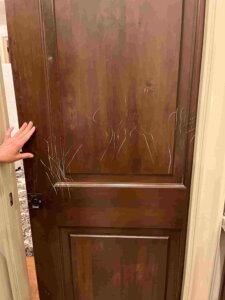
If you need commercial door repair on a wood door, the issues are often frame warping, finish deterioration, or hardware failure that comes from the door shifting out of alignment. These are ongoing costs that add up over the life of the door.
Aluminum Doors: The Go-To for Storefronts and Glass Assemblies
Aluminum is the standard material for storefront door systems, glass curtain wall entries, and retail facades. It is lightweight, resists corrosion, and works naturally with large glass panels, which is why you see it in shopping centres, office building lobbies, and retail strips across Rhode Island.
Key strengths of aluminum in commercial applications:
- Naturally corrosion-resistant, which makes it a strong option in coastal New England climates
- Works well with glass framing, sliding door systems, and automatic door setups
- Lighter than steel, which reduces stress on hinges and frames over time
- Available in a wide range of finishes and anodized colours
The limitation is impact resistance. Aluminum dents more easily than steel, which makes it less suitable for high-abuse environments like loading areas, maintenance corridors, or any entry point that takes direct physical impact regularly.
For commercial door installation in Providence on storefronts, office building entries, or retail glass facades, aluminum is often the best fit.
Side-by-Side: Which Material Fits Your Situation
| Factor | Steel | Wood | Aluminum |
| Security | High | Moderate | Moderate |
| Durability | High | Lower in wet climates | High |
| Maintenance | Low | High | Low |
| Fire Rating | Available | Limited | Available |
| Corrosion Resistance | Needs coating | Needs sealing | Naturally resistant |
| Best Use | Industrial, schools, fire-rated | Interior, lobby, premium office | Storefront, glass entry, retail |
Commercial Door Installation in Providence – The First Choice Matters
A door material that does not match your building’s function creates a cycle of repairs that adds up fast. Wood on an exterior entry that faces rain and salt air will warp within a few seasons. Steel without proper coating in a coastal environment will corrode and require refinishing or replacement. Aluminum on a loading dock that handles forklift traffic will dent and deform.
These are not edge cases. They are the most common reasons businesses end up needing early door replacements, which cost far more than choosing the right material the first time.
Providence Door Company handles commercial door installation in Providence across steel, wood, aluminum, and glass door systems for businesses in Rhode Island and Massachusetts. Contact us today, and we will help you choose the material that fits your building, your budget, and your daily use before any installation begins.