Your staff push through that back exit a hundred times a day and never look at it. Then one morning the bar sticks, the latch drags, and you wonder how long it has been like that. A failing push bar is quiet until the day it matters, and that is why panic bar repair in Providence, RI should start the moment you notice something feels off. T
This guide walks through how these exit devices fail, the early clues to catch, and what a fix involves before a small fault turns into a locked-in emergency.
What a Panic Bar Does and What Wears It Down
A panic bar, also called an exit device or push bar, is the horizontal bar across an exit door that releases the latch when someone pushes it. Fire and building codes require it on many commercial doors so people can leave fast during an emergency, with no key, knob, or twisting needed. The design is simple on the outside, but inside there are springs, a latch, a dogging mechanism, and moving links that all take a push each time the door opens.
That constant use is what wears them down. A busy store, office, or school exit can see thousands of pushes a month, and grade 1 commercial devices are built for at least 500,000 to 1,000,000 cycles before parts fatigue. Weather, slamming, and skipped maintenance speed that wear along. So a bar that worked fine for years can slowly drift out of spec, which is why knowing the early clues protects both your people and your compliance.
The First Things You Notice When an Exit Device Fails
A push bar rarely dies all at once. It gives you warnings first, and catching them early is the difference between a quick tune-up and a full replacement. You will notice one or more of these problems as the device wears:
- The bar feels stiff or needs a hard shove to release the latch
- The latch does not catch, so the door drifts open on its own
- Grinding, squeaking, or rattling sounds when the bar moves
- The bar sags, sticks halfway, or does not spring back
- The door fails to lock or latch after it swings shut
Any one of these means the device is no longer working the way code expects. Under building and fire codes, an exit door latch should release with no more than 15 pounds of force, and on accessible routes the pull side must operate with 5 pounds or less, per the standards collected by UpCodes. When your staff have to lean into the bar, you are already past that line.
Push Bars That Stick or Need a Hard Shove
This is the most common early sign, and the most ignored. Dried grease, grit in the mechanism, or a worn spring makes the bar feel heavy. It still opens, so people push harder and move on. The danger is that a stiff bar in a calm morning becomes an impossible bar during a smoky, crowded evacuation, when panic and pressure at the door are already high. A device that needs a shove is a device that needs service now.
Latches That Miss or Leave the Door Unlocked
The latch is the part that holds the door shut and lets it release under a push. When it wears or falls out of line with the strike plate on the frame, two things happen. The door either will not latch, leaving your building open after hours, or the latch drags and the bar sticks. A misaligned strike, a sagging door, or a loose mounting can all throw this off, so the fix sometimes involves the frame and hinges, not only the bar.
What Causes Panic Bars to Break Down in Providence Buildings
Knowing the cause helps you stop the next failure. Most breakdowns trace back to a short list of issues that build over time in busy commercial settings.
Heavy daily traffic is the top one, since every push adds wear to springs and latches. New England weather adds its own strain, as cold, damp, and salt work into the mechanism and speed up rust and stiffness on exterior exits. Doors that slam, either from a broken closer or from wind, hammer the latch and knock alignment loose. Skipped maintenance ties it all together, because a device that never gets cleaned, lubricated, or adjusted drifts out of spec long before anyone checks it. A worn door closer often shows up alongside a failing bar, since the two work as a pair on the same door.
What a Broken Exit Device Puts at Risk
This is not a cosmetic problem. A push bar is life-safety hardware, and a failing one puts people and your business on the line at the same moment.
In an emergency, seconds count. A bar that jams or needs a hard push slows a crowd trying to get out, and in an assembly space or school, codes require panic hardware exactly because a fast, one-motion exit saves lives when many people leave at once. On the security side, a bar that will not latch leaves your building unlocked overnight, open to theft or worse. There is also the legal weight. A malfunctioning exit device is a code violation and a liability, and a failed inspection can bring fines or force a door out of service. So a fault you delay is a risk that grows on three fronts at once.
What Happens When You Book a Panic Bar Repair
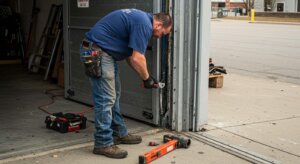
Once you call it in, the first step is a check, not a guess. A technician tests the push force, watches how the latch catches, and looks at the strike, hinges, and closer, since the fault may sit in the door rather than the bar. From there, the path splits.
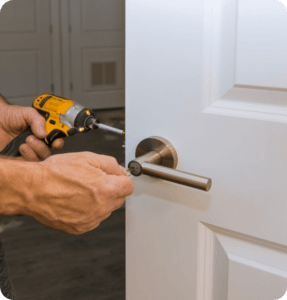
Many issues are a straight repair. Cleaning and lubricating the mechanism, swapping a worn spring, replacing the latch, or realigning the strike often brings a bar back to smooth, code-level operation. When the device is cracked, badly corroded, or past its cycle life, replacement is the safer call, and choosing the right exit device matters, whether it is a rim, mortise, vertical rod, or fire-rated unit. On fire-rated doors, the hardware must positively latch every time, so those get extra attention during any exit device repair. A regular maintenance check, with inspection, lubrication, and adjustment, keeps the bar from reaching failure in the first place.
Book Panic Bar Repair in Providence Before Your Exit Device Fails
A push bar gives you warnings for weeks, then fails on the one day you cannot afford it, during a fire drill gone real, a rushed closing, or an inspection you did not see coming. Waiting turns a simple adjustment into a full replacement, a code violation, or a door standing open all night. You know the exit that feels off. That feeling is the time to act.
Providence Door Company handles panic bar repair in Providence, RI for offices, stores, schools, and homes across Rhode Island and Massachusetts, with technicians who repair sticking bars, worn latches, and misaligned strikes, and offer 24/7 emergency service when a door will not lock or open. When your exit device feels stiff, drags, or will not latch, contact our Providence team and get it tested before a small fault becomes a locked-in emergency.